

Convert Rust.
Protect Metal.
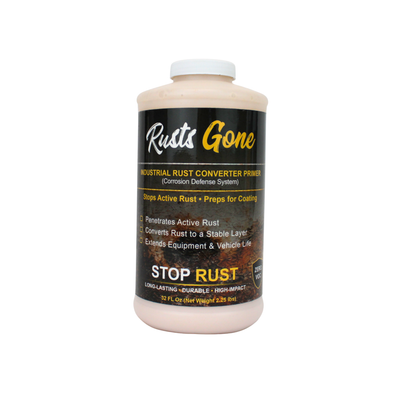
Rusts Gone converts iron oxide into stable iron tannate — a dark, protective compound that stops corrosion and creates an ideal surface for primer, paint, or topcoat.
Rust Removal in Four Steps
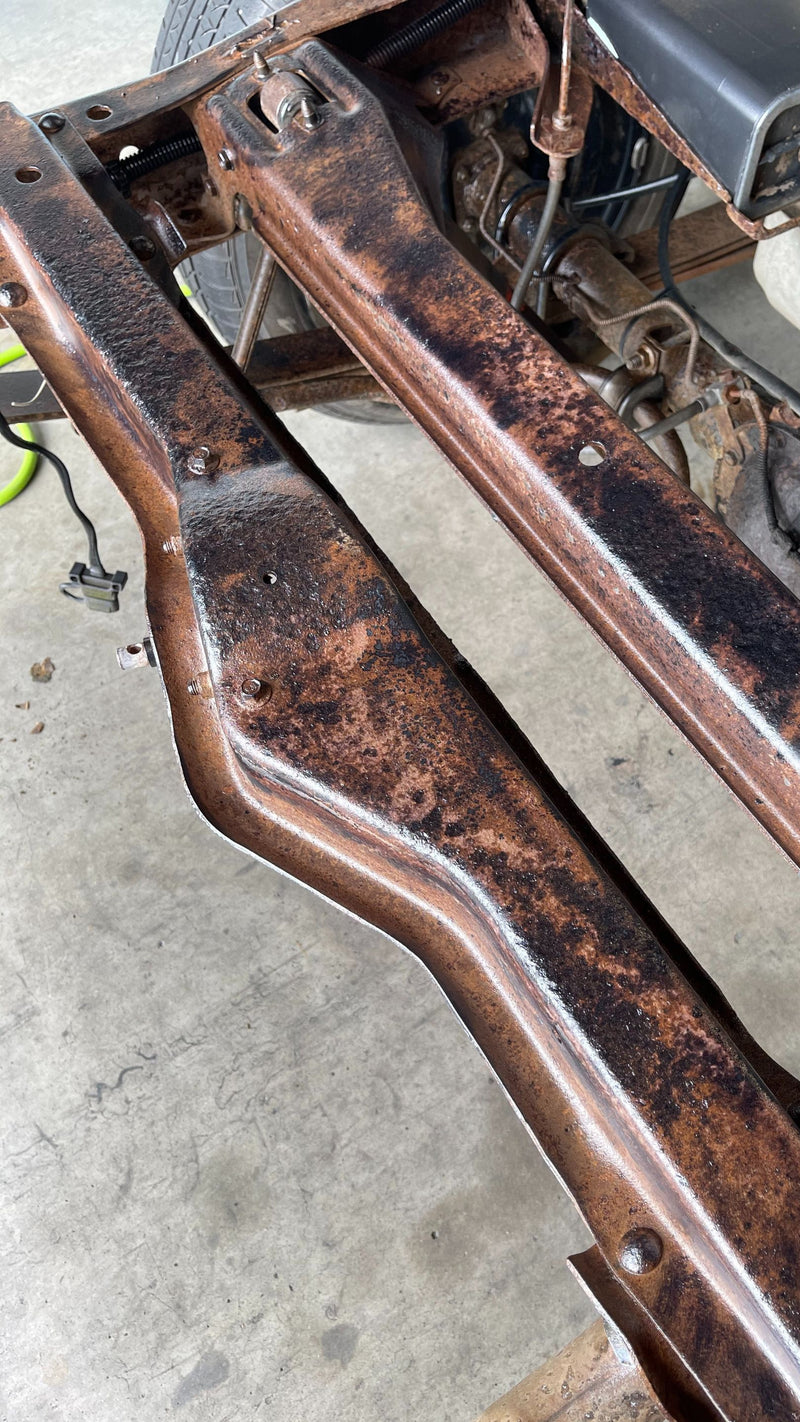
From rusty to restored — Rusts Gone makes professional-grade rust treatment accessible to everyone.
Assess the Rust
Identify areas of surface rust, scale, or oxidation. For heavy, flaking rust, use a wire wheel or wire brush to knock down loose scale and debris first. Rusts Gone works best on firmly attached rust — removing loose material ensures full contact with the reactive metal underneath.
Apply Rusts Gone
Spray or brush Rusts Gone directly onto rusted surfaces. The tannic acid begins reacting on contact, bonding with the iron oxide to begin the conversion process. No scrubbing or agitation needed — let the chemistry do the work.
Let It Cure
Do not rinse. Allow Rusts Gone to cure for a full 24 hours. During this time the tannic acid completes its reaction with the iron oxide, forming a dark iron tannate layer across the entire treated surface. This layer is stable, non-reactive, and bonds directly to the metal.
Apply Topcoat
Once fully cured, the iron tannate surface is ready for your topcoat — primer, paint, undercoating, or any protective finish. No rinsing or additional prep needed. The converted surface provides excellent adhesion for coatings, sealing the metal against future corrosion.v
How Rusts Gone Converts Rust
A proven chemical conversion process that transforms destructive iron oxide into a stable, protective compound.
Tannic Acid Reaction
Rusts Gone's tannic acid reacts with iron oxide on contact, forming a chemical bond with the rust molecules. Rather than stripping or dissolving the rust, it transforms unstable iron oxide into a new, stable compound — stopping the corrosion process where it stands.
Iron Tannate Conversion
The reaction produces iron tannate — a dark, stable compound that bonds to the metal surface. Unlike rust, iron tannate doesn't flake, doesn't spread, and actually provides a corrosion-resistant layer that serves as an excellent primer base.
Oxidation Arrest
By converting reactive iron oxide to stable iron tannate, Rusts Gone permanently breaks the oxidation cycle. Moisture and oxygen can no longer reach reactive iron — the tannate layer acts as both a chemical barrier and a mechanical bond coat for whatever topcoat you apply.
Rusts Gone vs. Traditional Rust Removal
See how chemical conversion compares to sanding, wire brushing, and naval jelly.
The Complete Guide to Rusts Gone
What Is Rust and Why Does It Spread?
Rust is the common name for iron oxide (Fe₂O₃), the reddish-brown compound that forms when iron or steel is exposed to moisture and oxygen. What makes rust so destructive is that it is not a passive process — it is an electrochemical chain reaction. Once rust begins on a metal surface, the oxidized area becomes an anode that accelerates corrosion on adjacent metal. This is why a small chip in paint can lead to an entire panel rusting through. Moisture acts as the electrolyte, oxygen fuels the reaction, and the rust itself catalyzes further oxidation. Without intervention, rust spreads exponentially, weakening structural integrity and eventually causing metal to flake apart entirely.
Why Mechanical Removal Often Fails
Traditional rust removal methods — sanding, wire brushing, grinding, and scraping — physically remove the visible layer of oxidation from the surface. While this can be effective for flat, accessible areas, mechanical methods have significant limitations:
- Cannot reach recessed areas: Rust often forms inside seams, behind panels, inside tubes, and around fasteners where no tool can reach.
- Creates new corrosion points: Sanding and grinding leave microscopic scratches in the metal surface. Each scratch is a potential starting point for new rust because it exposes fresh iron to moisture and oxygen.
- Does not address deep rust: Surface grinding may remove visible rust while leaving oxidation embedded in the metal's pore structure. This subsurface rust continues to spread beneath any paint or coating applied over it.
- Time and labor intensive: Mechanical rust removal on a vehicle undercarriage or trailer frame can take hours of physical labor with power tools, producing metal dust and sparks.
How Rusts Gone Works Differently
Rusts Gone uses tannic acid to chemically convert iron oxide into stable iron tannate rather than mechanically removing it. When the formula contacts rust, the tannic acid reacts with iron oxide to produce iron tannate — a stable, non-reactive compound. Iron tannate is a dark, stable compound that bonds tightly to the underlying metal. Unlike rust, iron tannate does not flake, does not spread, and does not attract moisture. It actually forms a corrosion-resistant barrier that serves as an excellent base for primer and paint. This chemical conversion process reaches everywhere the liquid can flow — into seams, around bolts, inside tubes, and across large flat surfaces equally.
Best Application Methods
Rusts Gone can be applied using several methods depending on the size and accessibility of the rusted area:
- Spray application: Use a pump sprayer or trigger spray bottle for large, open surfaces like trailer frames, vehicle undercarriages, fences, and equipment panels. Spray a generous, even coat so the surface remains wet during the dwell period.
- Brush application: Use a paintbrush or acid brush for detailed work around fasteners, inside corners, along weld seams, and on irregular surfaces. Brushing also provides light agitation that helps the formula penetrate heavy scale.
- Soaking: For small hardware, bolts, hinges, tools, and removable parts, submerge them in a container of Rusts Gone. Soaking provides complete coverage and is the most effective method for heavily rusted components with complex geometry.
Surface Preparation Tips
For best results with Rusts Gone, prepare the surface before application:
- Remove loose scale: Use a wire brush or scraper to knock off any heavy, flaking rust that is already detached from the surface. You do not need to remove all rust — just the loose material that would prevent the formula from reaching the underlying metal.
- Apply to dry surfaces: Rusts Gone works best on dry metal. Standing water dilutes the formula and reduces its effectiveness. If the surface is wet, allow it to dry or wipe it down before application.
- Clean grease and oil: Heavy grease or oil can prevent Rusts Gone from contacting the rust. Degrease heavily contaminated surfaces before treatment.
Dwell Time Guidelines
The application is straightforward: apply a generous coat, and allow a full 24-hour cure. For heavy, flaking rust, wire wheel the loose scale first. For moderate to heavy rust, a second coat may be applied after the first has cured. Do not rinse between coats or after the final application.
After Treatment: Cure and Topcoat
Once applied, do not rinse. Allow a full 24-hour cure time for the tannic acid to fully convert the iron oxide into stable iron tannate. The surface will darken as conversion completes — this is the iron tannate layer forming. Once cured, apply your protective coating — primer, paint, undercoating, or rust-inhibiting spray — directly over the converted surface. The iron tannate provides excellent adhesion for coatings. Apply your topcoat within 48 hours of curing for best results.
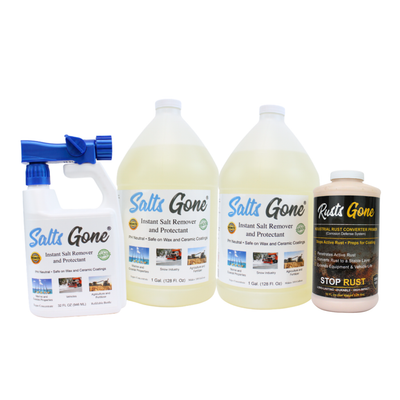
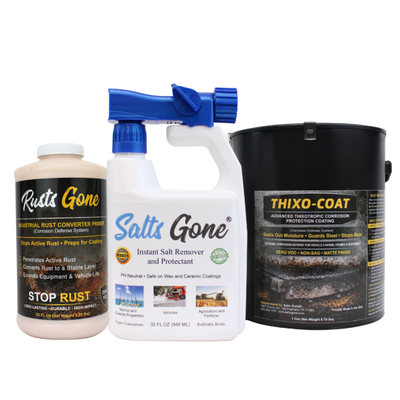
Using Rusts Gone with Salts Gone®
For the best results on surfaces exposed to both salt and rust, use the two products together in the correct order:
- Step 1 — Remove salt first: Apply Salts Gone® to the entire surface to chelate and remove all salt contamination. Salt residue can interfere with the rust conversion process, so thorough salt removal is critical.
- Step 2 — Treat rust: Once salt has been removed and the surface is dry, apply Rusts Gone to all rusted areas. Allow a full 24-hour cure. Do not rinse.
- Step 3 — Protect: Once the Rusts Gone treatment has fully cured, apply your chosen protective coating. For ongoing salt exposure, periodic Salts Gone® treatments will prevent new salt accumulation and the rust cycle from restarting.
Common Use Cases
Rusts Gone is effective across a wide range of applications:
- Vehicle undercarriages: Frame rails, crossmembers, suspension components, and brake brackets.
- Trailer frames: Boat trailers, utility trailers, and equipment trailers exposed to road salt or saltwater.
- Tools and hardware: Wrenches, pliers, bolts, hinges, and hand tools that have developed surface rust from storage.
- Outdoor furniture: Iron and steel patio sets, benches, gates, and railings.
- Farm equipment: Implement frames, hitch assemblies, disc blades, and PTO components.
- Industrial equipment: Structural steel, conveyor frames, storage racks, and fabrication shop projects.
Safety Information
Rusts Gone contains tannic acid. While it is far safer than muriatic acid or other aggressive rust removers, basic safety precautions should always be followed:
- Wear chemical-resistant gloves: Nitrile or rubber gloves protect your hands from skin irritation during application.
- Wear eye protection: Safety glasses or goggles prevent accidental splashes from reaching your eyes.
- Work in a well-ventilated area: When using Rusts Gone indoors or in enclosed spaces, ensure adequate airflow. Open doors, windows, or use fans to maintain ventilation.
- Avoid contact with aluminum and chrome: Tannic acid can react with aluminum and damage chrome plating. Test on an inconspicuous area before full application on any surface you are unsure about.
- Store properly: Keep the container sealed and stored in a cool, dry place away from direct sunlight and extreme temperatures.
Stop Rust Before It Spreads
Every day untreated rust grows. Rusts Gone halts oxidation and converts rust into a stable, coatable surface — protecting your metal for the long term.
What Our Customers Say
Trusted by boaters, drivers, fleet operators, and homeowners across the country.
This is a must have if you live in the rust belt. I use it on my truck and tractor. It's amazing stuff.
As a coastal homeowner, we are finally able to efficiently protect our property from the corrosive environment around us.
I have been using Salts Gone on my boat and jet ski now for 2 years. Best product I have ever used. Way better than the competitors.
We use Salts Gone on our plow trucks after each snow event and are very happy with the results! Clean trucks with no salt residue left behind.
Best salt fighting product on the market. Honest advertisements unlike the competitor.
What a shocking experience! My pickup is not only showing no signs of salt, it is cleaner than it was before!
Rusts Gone Questions
Everything you need to know about our rust removal and conversion product.