

How Salts Gone® Leaves a Protective Barrier After Every Wash
After chelation removes salt at a molecular level, Salts Gone® leaves a light corrosion-inhibiting film that helps resist future salt adhesion between treatments.
How the Barrier Forms
A three-stage process that goes beyond cleaning to actively protect your surfaces.
Surface Preparation
Chelation removes all salt ions, mineral deposits, and ionic contaminants from the surface. This creates an atomically clean substrate — free of the invisible salt residue that water alone leaves behind.
Molecular Deposition
Corrosion inhibitors in the formula remain on the freshly cleaned surface after rinsing. These molecules form a light residual film that helps resist future salt contact and slows the onset of corrosion between applications.
Active Protection
The residual film provides a layer of resistance against future salt exposure. It helps slow salt adhesion between washes, giving you more time before corrosion can take hold again.
How the Protective Film Works
What Salts Gone® leaves behind after every application.
Residual Protective Film
Corrosion inhibitors in the formula help slow the oxidation process on treated metal surfaces. This buys valuable time between applications, especially in environments where salt exposure is constant.
Corrosion Inhibitor Film
A secondary molecular film provides electrochemical protection. Corrosion inhibitors interfere with the anodic and cathodic reactions that drive oxidation, effectively slowing the electrochemical process that converts metal to rust.
Pore-Filling Agents
The formula helps reach into surface imperfections where salt ions typically lodge. By treating these hard-to-reach areas during chelation, Salts Gone® provides more thorough protection than surface-level cleaning alone.
The Science Behind the Barrier
Why Salt Removal Alone Isn't Enough
Chelation does the critical work of pulling salt ions off your surfaces at a molecular level. But once those ions are removed, the freshly cleaned surface is immediately exposed to the environment again. Without any residual protection, the next salt exposure — whether it's road brine on the drive home or sea spray on the next outing — begins the corrosion cycle right where it left off.
That's why Salts Gone® is formulated to leave a light corrosion-inhibiting film on every treated surface. It's not a heavy coating or a replacement for dedicated protectants — it's a residual layer that buys you time between treatments and helps resist salt from re-adhering as quickly.
What the Protective Film Does
After Salts Gone® chelates and removes salt ions from a surface, corrosion inhibitors in the formula remain behind as a thin residual film. This film serves a straightforward purpose: it slows the rate at which new salt ions can bond to the treated surface and helps delay the onset of oxidation between washes.
Think of it as a buffer, not a barrier. It does not replace wax, ceramic coatings, or dedicated undercoating products. It does not make surfaces waterproof or permanently protected. What it does is extend the window between treatments — giving you more usable time before salt can gain a foothold and corrosion restarts.
How Long Does It Last
The residual film's effectiveness depends on how severe the salt exposure is. A garaged vehicle driven on lightly salted roads may retain some benefit for a few weeks. Equipment in harsh environments — constant road brine, ocean spray, or industrial salt — will need more frequent reapplication to maintain any meaningful protection.
The film doesn't fail all at once. It gradually diminishes with environmental exposure. Establishing a regular wash schedule with Salts Gone® is the most effective way to maintain continuous protection — each application removes whatever salt has accumulated and refreshes the protective film.
Works With Your Existing Protection
The residual film is fully compatible with wax, ceramic coatings, sealants, and undercoating products. In fact, Salts Gone® is best used as the first step before applying any topcoat or protectant. Chelation ensures that salt contamination is completely removed before you seal the surface — preventing the common mistake of trapping salt underneath a coating, which accelerates hidden corrosion.
For maximum protection, the recommended approach is: Salts Gone® first to remove salt and leave the residual film, then your preferred wax, ceramic, or undercoating product on top for long-term surface protection.
Surfaces That Benefit Most
- Vehicle undercarriages and frames: The most corrosion-prone areas that accumulate salt in hidden cavities between washes.
- Trailer frames and hitches: Constantly exposed to road spray and rarely washed — the residual film provides between-wash resistance.
- Boat hardware and motors: Marine hardware faces relentless saltwater exposure. The film helps between rinses.
- Electrical connections: Salt on terminals causes intermittent failures. The residual film helps keep contacts cleaner between treatments.
How to Get the Most From It
- Reapply after heavy salt exposure: Don't wait for your regular schedule if you've been through a salt storm or rough seas.
- Establish a routine: Weekly application during peak salt season keeps protection refreshed. Monthly during off-season.
- Cover all exposed areas: The film only protects surfaces it contacts — make sure to treat undercarriages, wheel wells, and hidden areas.
- Use with dedicated protectants: Salts Gone® handles salt removal and light residual protection. Pair it with your preferred wax, ceramic, or undercoating for comprehensive surface defense.
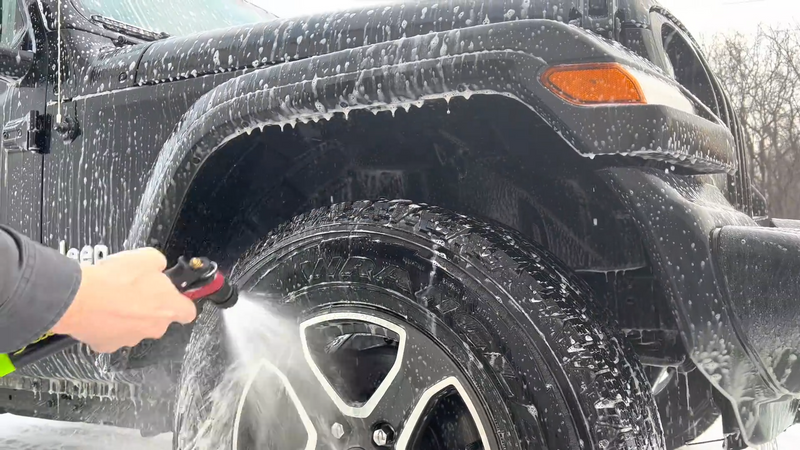
Clean and Protect in One Step
Salts Gone® doesn't just remove salt — it leaves a protective barrier that fights corrosion between applications.
What Our Customers Say
Trusted by boaters, drivers, fleet operators, and homeowners across the country.
This is a must have if you live in the rust belt. I use it on my truck and tractor. It's amazing stuff.
As a coastal homeowner, we are finally able to efficiently protect our property from the corrosive environment around us.
I have been using Salts Gone on my boat and jet ski now for 2 years. Best product I have ever used. Way better than the competitors.
We use Salts Gone on our plow trucks after each snow event and are very happy with the results! Clean trucks with no salt residue left behind.
Best salt fighting product on the market. Honest advertisements unlike the competitor.
What a shocking experience! My pickup is not only showing no signs of salt, it is cleaner than it was before!

Protective Barrier Questions
Understanding how Salts Gone® protects your surfaces after cleaning.