

Surface Compatibility - What Materials Is Salts Gone® Safe On?
Salts Gone® is pH-neutral, non-corrosive, and non-abrasive. It's been tested and proven safe on metals, paints, plastics, rubber, glass, concrete, and more — with no discoloration, etching, or damage.
Tested & Proven on 12+ Surface Types
Every material listed below has been tested for compatibility with Salts Gone®. No damage, no discoloration, no exceptions.
Aluminum
Wheels, boat hulls, trailer frames
Steel & Iron
Undercarriages, chassis, frames
Stainless Steel
Marine hardware, rails, fasteners
Chrome
Bumpers, wheels, exhaust tips
Automotive Paint
Clear coat, base coat, single-stage
Gel Coat
Fiberglass boats, RVs, pools
Powder Coat
Equipment, outdoor furniture, fencing
Glass
Windshields, windows, mirrors
Plastic & Vinyl
Trim, covers, seats, dashboards
Rubber & Seals
Gaskets, weatherstripping, tires
Electrical
Connectors, terminals, wiring
Concrete & Masonry
Driveways, foundations, sea walls
The Science Behind Surface Safety
Three key properties make Salts Gone universally compatible with every surface type.
pH-Neutral Formula
Salts Gone® maintains a neutral pH between 6.5 and 7.5 — the same range as purified water. Unlike acidic rust removers or alkaline degreasers, it won't etch aluminum, cloud clear coats, or attack rubber seals.
Non-Abrasive Action
Chelation works through molecular bonding, not mechanical scrubbing. There are no abrasive particles, no harsh solvents, and no oxidizing agents that could scratch, dull, or damage delicate finishes and coatings.
Selective Ion Targeting
Chelating agents selectively target salt ions (Na⁺, Cl⁻, Ca²⁺, Mg²⁺) without reacting with the substrate material. This selectivity means the formula removes contaminants while leaving the underlying surface completely unaffected.
Complete Surface Compatibility Guide
Metals: Aluminum, Steel, Stainless Steel, Chrome, Copper & Brass
Metal surfaces are among the most vulnerable to salt-induced corrosion. Sodium chloride, calcium chloride, and magnesium chloride accelerate oxidation by creating an electrolyte solution on the metal surface, enabling galvanic corrosion to take hold rapidly. Acidic cleaners compound this problem — hydrochloric and phosphoric acid-based products strip protective oxide layers from aluminum, pit chrome plating, and etch stainless steel's passive chromium oxide film.
Salts Gone's® pH-neutral chelation formula eliminates salt contamination without disturbing the metal's natural protective oxide layer. On aluminum wheels, boat hulls, and trailer frames, this means no white oxidation pitting. On stainless steel marine hardware, rails, and fasteners, the passive layer remains fully intact. Chrome bumpers, wheels, and exhaust tips retain their mirror finish with zero clouding or micro-pitting. Copper and brass fittings — common in marine and industrial applications — stay bright without the green patina that acid exposure accelerates.
Tip: For heavily corroded metal surfaces, apply Salts Gone® first to remove all salt contamination before using any restoration product. This ensures the corrosion source is eliminated before repairs begin.
Automotive Finishes: Clear Coat, Single-Stage, Matte & Wrapped Vehicles
Modern automotive paint systems consist of multiple layers — primer, base coat, and clear coat — each engineered to protect the one beneath it. Salt deposits trapped beneath wax or sealant layers create localized corrosion cells that eat through clear coat from the inside out, causing bubbling, peeling, and eventual base coat failure. Many salt removal products contain solvents or alkaline compounds that strip wax, dull clear coat, and leave matte finishes with unwanted sheen.
Salts Gone® targets only salt ions through chelation, leaving clear coat, wax, ceramic coatings, paint protection film (PPF), and vinyl wraps completely unaffected. Single-stage paints — common on classic cars and commercial vehicles — are safely treated without dulling or discoloration. Matte and satin finishes maintain their original sheen level because the formula contains no polishing agents or fillers.
Tip: Apply Salts Gone® before waxing or applying sealant to ensure no salt is trapped beneath the protective layer. This prevents hidden corrosion cells from forming under your paint protection.
Marine Surfaces: Gel Coat, Fiberglass, Teak & Canvas
Saltwater environments subject surfaces to constant chloride exposure. Gel coat on fiberglass boats develops osmotic blisters when salt penetrates micro-cracks in the surface. Teak decking suffers accelerated weathering as salt crystals expand in the wood grain. Canvas covers, Bimini tops, and enclosures lose water repellency as salt deposits block the fabric's DWR coating. Traditional boat wash products often contain alkaline detergents that accelerate gel coat oxidation and strip teak's natural oils.
Salts Gone® removes chloride contamination from all marine surfaces without damaging gel coat, fiberglass laminate, teak, canvas, or marine-grade vinyl. The pH-neutral formula rinses cleanly from fabric surfaces without leaving residue that blocks waterproofing treatments.
Tip: Rinse your boat with Salts Gone® after every saltwater outing, paying special attention to hardware mounting points, scupper drains, and under gunwale areas where salt accumulates unseen.
Plastics & Rubber: ABS, Polycarbonate, Vinyl, EPDM & Silicone
Polymer-based materials are susceptible to chemical attack from solvents, petroleum distillates, and strong alkaline solutions commonly found in all-purpose cleaners and degreasers. These chemicals cause plastics to become brittle, discolored, and cracked over time. Rubber seals, gaskets, and weatherstripping made from EPDM and silicone swell, soften, or crack when exposed to incompatible cleaning chemicals. Vinyl trim, seat covers, and dashboard components fade and harden from solvent exposure.
Salts Gone® contains no petroleum solvents, no alcohol, and no alkaline compounds that degrade polymer chains. ABS plastic housings, polycarbonate lenses, vinyl wraps, and all rubber compounds remain structurally and cosmetically unaffected after treatment. This makes it safe for interior detailing of salt-contaminated vehicles where salt tracked in on boots and clothing has settled on plastic and vinyl surfaces.
Tip: Use Salts Gone® on rubber door seals and weatherstripping in winter to prevent salt from degrading the rubber and causing leaks.
Glass & Mirrors
Glass surfaces in automotive, marine, and architectural applications are susceptible to etching from acidic cleaners and water spot formation from mineral-laden rinse water. Salt deposits left on windshields and windows create nucleation points for water spots and can etch into the glass surface over time, especially in direct sunlight where salt concentrations increase through evaporation.
Salts Gone® removes salt deposits from all glass surfaces without etching or hazing. The formula rinses clean, leaving windshields, windows, mirrors, and glass instrument panels streak-free and optically clear.
Tip: Treat windshields with Salts Gone® before applying rain repellent coatings to ensure maximum adhesion and clarity.
Concrete & Masonry
Concrete driveways, garage floors, foundations, and sea walls suffer significant damage from salt exposure. De-icing salt and saltwater intrusion cause efflorescence — the white crystalline deposits that form as salt migrates through porous concrete and evaporates on the surface. Over time, salt crystallization within concrete pores generates expansive pressure that causes spalling, cracking, and structural deterioration. Acid-based concrete cleaners remove efflorescence but damage the concrete matrix and kill surrounding vegetation.
Salts Gone® penetrates porous concrete and masonry to chelate embedded salt ions, removing both surface efflorescence and subsurface salt contamination without damaging the concrete, mortar, or surrounding landscape. The biodegradable formula is safe for use near gardens, lawns, and waterways.
Tip: For best results on concrete, apply Salts Gone® with a pump sprayer, allow five minutes of dwell time, then rinse thoroughly. Repeat for heavily contaminated surfaces.
Electrical Components
Salt contamination on electrical connectors, terminals, battery posts, and wiring harnesses causes resistance buildup, voltage drop, and eventual circuit failure. Marine and automotive electrical systems are particularly vulnerable because salt creates conductive bridges between terminals, causing parasitic drain and short circuits. Most electrical contact cleaners contain volatile solvents that can damage wire insulation, connector housings, and conformal coatings on circuit boards.
Salts Gone® is non-conductive when dry and leaves only a light corrosion-inhibiting film on treated surfaces. It safely removes salt contamination from electrical connectors, battery terminals, fuse panels, and wiring without damaging insulation, conformal coatings, or connector housings. After treatment and drying, electrical connections return to their original conductivity specifications.
Tip: Disconnect battery terminals before treating electrical components. Apply Salts Gone®, allow to dwell for two minutes, rinse with clean water, and dry thoroughly before reconnecting.
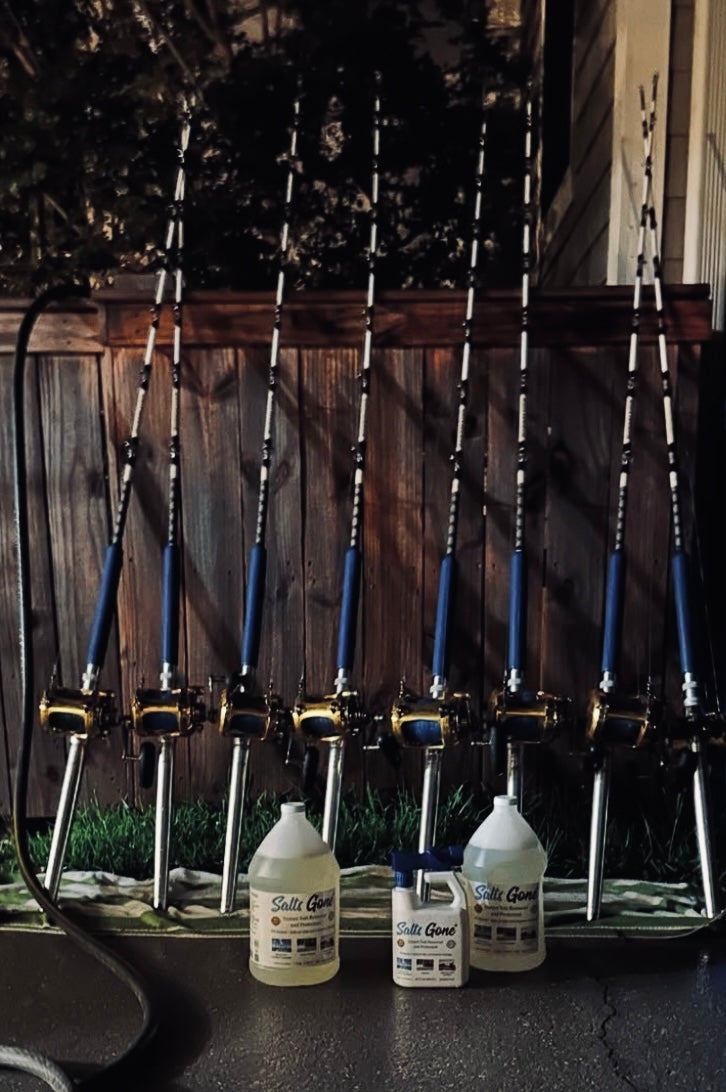
One Product, Every Surface
Stop buying different cleaners for different materials. Salts Gone® works everywhere salt causes damage.
What Our Customers Say
Trusted by boaters, drivers, fleet operators, and homeowners across the country.
This is a must have if you live in the rust belt. I use it on my truck and tractor. It's amazing stuff.
As a coastal homeowner, we are finally able to efficiently protect our property from the corrosive environment around us.
I have been using Salts Gone on my boat and jet ski now for 2 years. Best product I have ever used. Way better than the competitors.
We use Salts Gone on our plow trucks after each snow event and are very happy with the results! Clean trucks with no salt residue left behind.
Best salt fighting product on the market. Honest advertisements unlike the competitor.
What a shocking experience! My pickup is not only showing no signs of salt, it is cleaner than it was before!

Surface Compatibility Questions
Common questions about using Salts Gone on specific surfaces.